





Best Glasses for Working Out: Sport Frames That Stay Put

Reviewed by
Neggie Saadatpay-Wright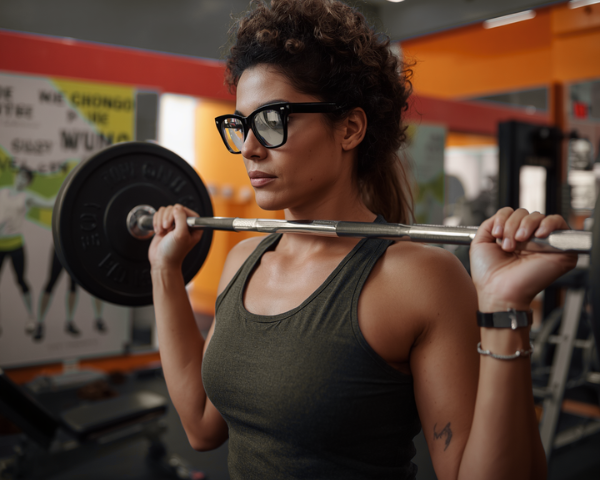
Overview
Working out with glasses is comfortable and safe when you choose the right frames, lenses and accessories.
Active people who wear prescription lenses generally have three options: keep using everyday glasses with a few upgrades, invest in prescription sports glasses, or switch to contact lenses for workouts.
Key takeaways:
- Use a glasses strap or sports band to stop frames slipping during movement.
- Choose polycarbonate or Trivex lenses for impact resistance and lighter weight.
- Pick TR90 or nylon-based frames — flexible, lightweight and sweat-resistant.
- Apply anti-fog wipes, sprays, or coatings to prevent foggy lenses during cardio.
- Match eyewear to your activity: wraparound styles for running and cycling, sports goggles for contact sports and prescription swim goggles for the pool.
- Contact lenses are often the easiest solution for high-intensity or impact sports.
Why regular glasses struggle at the gym
Everyday eyewear is designed for everyday life, not for jumping rope, deadlifting, or sprinting in 30°C heat. A few things tend to go wrong when you take a standard pair into a workout:
- They slide down your nose as soon as you start sweating.
- Lenses fog up the moment your body heat rises, especially during cardio or in humid gyms.
- A loose-fitting frame can fly off mid-burpee or get caught on equipment.
- Peripheral vision is limited compared to wraparound styles, which matters in fast-moving sports.
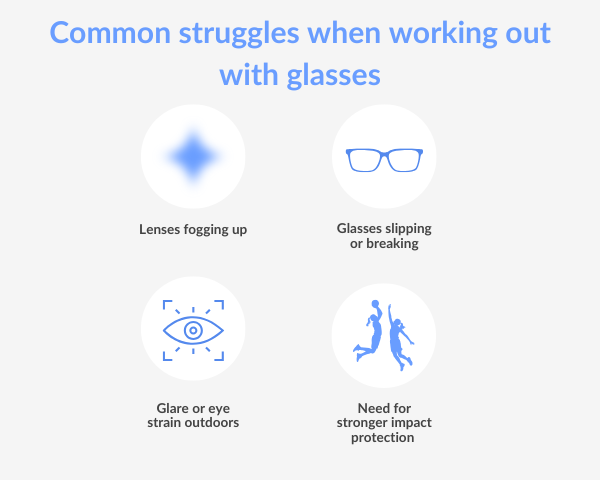
These aren’t deal-breakers, but they’re real frictions. Most can be solved by picking the right frames, or with a few adjustments.
Three options for exercising with vision correction
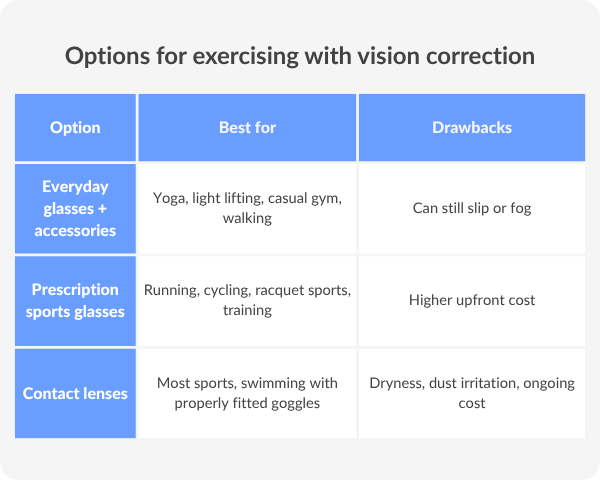
Before buying new gear, it helps to know which approach suits your routine. Most active glasses-wearers fall into one of three camps.
Option 1: Sticking with your everyday glasses
This works if you do low-impact training: yoga, pilates, weightlifting with controlled movements, light cardio. With a few tweaks (a strap, a fit adjustment, anti-fog wipes), your daily pair can hold up just fine.
Option 2: Prescription sports glasses or goggles
A dedicated sports pair is the strongest long-term option. They’re built to grip, resist impact and ventilate properly. If you train hard or play sports, this is the path that prevents broken frames and frustration.
Option 3: Contact lenses as a compliment
Many active people use contacts for workouts and keep glasses for the rest of the day. Contacts give you a full field of vision and never fog up, which is unbeatable for running, cycling and contact sports.
Here’s a quick comparison to help you choose:
How to make your regular glasses work for exercise
If a new pair isn’t in the budget yet, these small changes go a long way.
Use a glasses strap or sports band
An elastic or silicone strap that loops behind your head is the single most effective fix for slippage. Cheap, easy to find and they make almost any frame gym-ready. Look for one with adjustable tension so you can dial in the fit.
Tackle fogging at the source
A few options, ranked roughly by effectiveness:
- Anti-fog wipes or sprays: apply before your session for a few hours of clear vision.
- Frame ventilation: choose styles with airflow gaps; this matters more than people realise.
If you wear a face covering or buff during cold-weather runs, point your exhale downward to keep warm breath off your lenses.
Get the fit dialed in at an optician
A free five-minute adjustment can transform how your glasses feel during movement. Ask your local optician to tighten the temples, tweak the nose pads and check the alignment. A snug fit alone solves most slipping issues.
You can also check out our Aftercare Guides to learn how to make some simple adjustments at home.
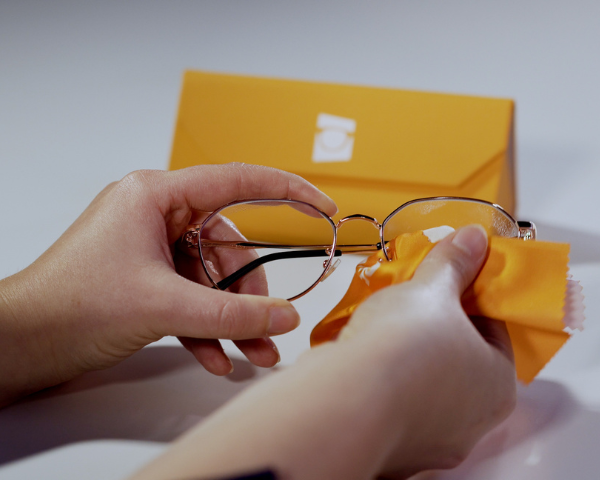
Keep a microfibre cloth in your gym bag
Sweat, dust and chalk all end up on your lenses. A small cloth lets you wipe them clean between sets. Microfibre is gentle and lint-free, which is what coated lenses need.
What to look for in prescription sports glasses
If you’re investing in a dedicated pair, here’s what actually matters.
Frame material
The best material for sports frames is TR90, which is lightweight and flexible.
TR90 bends under pressure rather than snapping, which is exactly what you want when a dumbbell brushes your face or a frame gets sat on.
Rubberised temples and silicone nose pads add grip when you sweat.
Lens material
For active use, polycarbonate and Trivex lens materials are the gold standard. They’re significantly more impact-resistant than standard CR-39 plastic, which means they are far more impact-resistant and safer for active users.
They’re also lighter, which reduces pressure on your nose during long sessions.
Frame shape
Wraparound frames provide better peripheral vision and stay more secure during side-to-side movements. They hug your face so they don’t slip, and they block side glare and wind. For outdoor training especially, the difference is noticeable.
EXPERT'S TIP!
“Wraparound frames may not be the best option for people with stronger prescriptions or higher astigmatism, as they may experience distortion or lens limitations in highly curved frames. In these cases, flatter sports frames or less curved rectangular styles often provide clearer and more comfortable vision while still offering good stability for exercise”.
Neggie Saadatpay-Wright, Dispensing Optician
Lens coatings worth paying for
- Anti-scratch: protects against gym chalk, sweat residue and accidental drops.
- Anti-reflective: sharpens vision under bright gym lighting.
- UV protection: essential for any outdoor activity.
Photochromic and polarised options
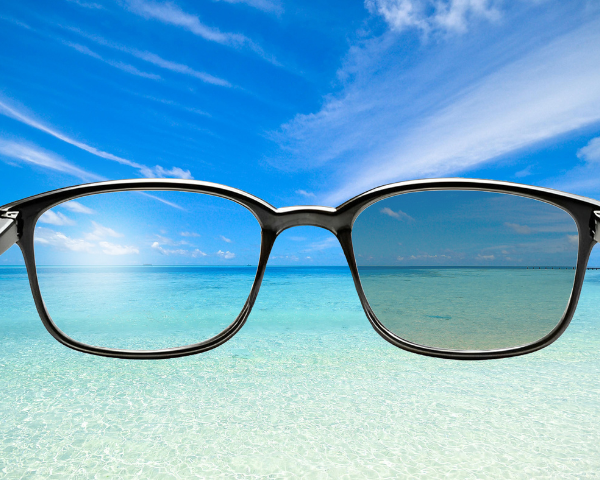
For outdoor athletes, photochromic lenses darken when exposed to UV light and clear up indoors.
Polarised lenses cut glare from roads, water, or snow, making them an ideal option for cycling and running. Both can be made with your prescription.
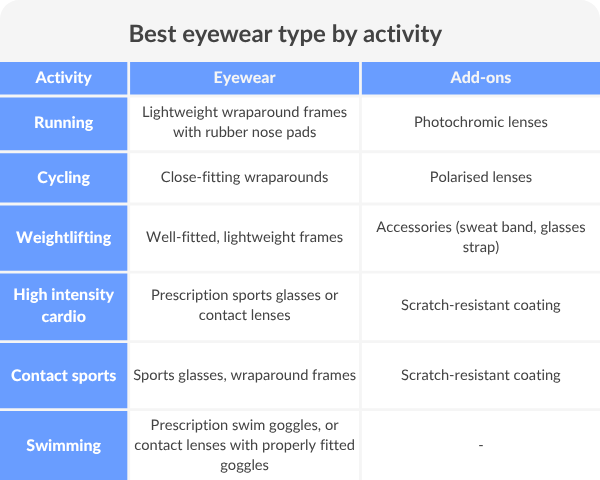
Best glasses by activity
Not all workouts put the same demands on your eyewear. Here’s what to prioritise for each.
Running and walking
Lightweight wraparound frames with rubber nose pads stay put when you’re pounding pavement. Outdoor runners benefit hugely from photochromic lenses so you don’t have to swap pairs when you head into a tunnel or a tree-lined path.
Cycling
Wind, dust and insects make this a high-protection sport. Look for close-fitting wraparounds with venting, polarised lenses for road glare and impact-resistant polycarbonate. Some cyclists use prescription inserts inside dedicated cycling shields.
Weightlifting and strength training
Slippage is the main enemy here. A well-fitted everyday pair with a strap usually does the job, but lighter frames with grippy temples are better. Avoid heavy metal frames, as they can shift every time you lie back on a bench.
Yoga, pilates and floor work
Movement is slow and controlled, but inversions and downward dog will send loose glasses sliding. A simple silicone ear hook or strap solves the issue. Lightweight frames are most comfortable.
HIIT and group cardio
High intensity plus quick direction changes equals maximum slip risk. A snug sports pair with a strap, or contact lenses, makes the biggest difference.
Contact and racquet sports
For squash, tennis, basketball, football and martial arts, impact resistance is non-negotiable.
Sports goggles with polycarbonate lenses and a wraparound strap protect your eyes from balls, elbows and rackets. Standard glasses can shatter on impact while sports goggles are designed to absorb it.
Swimming
Standard glasses aren’t an option in the pool. Prescription swim goggles are the best choice here, keeping your vision clear underwater and staying sealed against splashes.
However, most prescription swim goggles use stock lenses, which might not be tailored to an exact prescription.
Contact lenses can also be an option as long as it’s worn with properly fitted swimming goggles.
Caring for glasses you sweat in
Sweat is mildly acidic, so it slowly degrades frame finishes, nose pads and lens coatings if you don’t clean your glasses regularly. Proper cleaning and storage are key to maximising the quality and durability of your frames.
When contact lenses might make more sense
Contacts aren’t for everyone, but they solve a lot of the problems glasses create at the gym. They give you full peripheral vision, never fog or slip and let you wear any sunglasses, goggles, or helmet without compatibility issues.
While there are some downsides to this option, such as dry eyes in air-conditioned gyms and mild dust irritation outdoors, many find them the most convenient and comfortable option for vision correction.
If you’re unsure, daily disposables are a low-commitment way to test whether contacts suit your routine. Some people use them only for workouts and stick with glasses the rest of the time, a sensible hybrid.
Finding the right eyewear for your training
Sports eyewear options for active people include prescription sports glasses, wraparound frames with polycarbonate lenses, photochromic options for outdoor athletes, prescription swim goggles and a wide variety of contact lenses.
If you’re not sure which option suits your training, our certified opticians can help you decide between a sports pair, a strap-and-coating upgrade, or contact lenses.
Frequently asked questions
Can I wear my regular glasses at the gym?
Yes — for low-impact workouts like yoga, weightlifting, or moderate cardio. A glasses strap and anti-fog wipes make most everyday pairs gym-friendly. For higher-impact sports, prescription sports glasses or goggles are safer and more comfortable.
How do I stop my glasses from fogging up while working out?
Anti-fog wipes or sprays applied before training are the quickest fix. Frames with built-in ventilation reduce fogging significantly. Avoid covering your nose and mouth with anything that traps warm breath against the lenses.
Are prescription sports glasses worth it if I only work out a few times a week?
If you train consistently and your current glasses keep slipping, breaking, or fogging, yes.
A dedicated pair of prescription sports glasses lasts longer because it isn’t fighting sweat and movement every session. For occasional gym use, accessories like a strap and anti-fog wipes may be enough.
Are contact lenses better than glasses for exercise?
For most sports, contacts give you better peripheral vision and never slip or fog. Glasses are still fine for controlled movements and indoor workouts. Many active people use both — contacts on training days, glasses the rest of the time.
Can I get prescription sunglasses for outdoor running or cycling?
Yes. Prescription sunglasses, photochromic lenses and polarised lenses are all available with most prescriptions. For running and cycling, a wraparound style with polycarbonate lenses gives the best balance of protection and comfort.
What's the best lens material for impact resistance?
Polycarbonate and Trivex are the two strongest options for prescription lenses. They’re significantly more impact-resistant than standard plastic, and they’re also lighter — both qualities matter when you’re moving fast.
What about swimming with prescription glasses?
Regular glasses can’t be worn in the pool, but prescription swim goggles are widely available. They match your prescription, seal against water and keep your vision sharp during laps.
Are there accessories that could help with sweat management?
Using a sweatband or moisture-wicking hat can help keep sweat away from the nose pads, reducing slippage.