Ask our dispensing opticians

Ask Now

Photochromic vs. Polarised Lenses

By Lilly Parla
Reviewed by Neggie Saadatpay-Wright

Neggie Saadatpay-Wright is an ABO-certified optician with over 17 years of experience in the optical industry.

Photochromic and polarised lenses each offer unique benefits. Read on to find out which type is the best choice for you.
woman wearing transitions glasses

Overview

Both photochromic and polarised lenses protect your eyes from harmful UV rays, but they serve different purposes depending on your environment and lifestyle.

  • Photochromic lenses automatically darken in response to UV exposure, not just visible sunlight. This makes them ideal for everyday use, especially if you frequently move between different lighting conditions. However, because most car windshields block UV light, photochromic lenses may not darken fully while driving. For this reason, drivers often benefit more from polarised lenses or specialised “driving photochromics” designed to respond to lower levels of UV.

  • Polarised lenses, on the other hand, do not change tint. They offer consistent glare reduction by filtering out reflections from surfaces like water, roads and snow. This makes them especially effective for outdoor activities such as fishing, skiing or beach outings, where bright light and glare can strain the eyes.

What is the difference between photochromic and polarised lenses?

While both lens types block UV rays and come in various styles, their core functions differ. Photochromic lenses darken when exposed to UV light and return to clear indoors. 

Polarised lenses have a fixed tint and reduce glare by filtering out horizontal light that reflects off shiny surfaces like water, pavement or snow.

What are photochromic lenses?

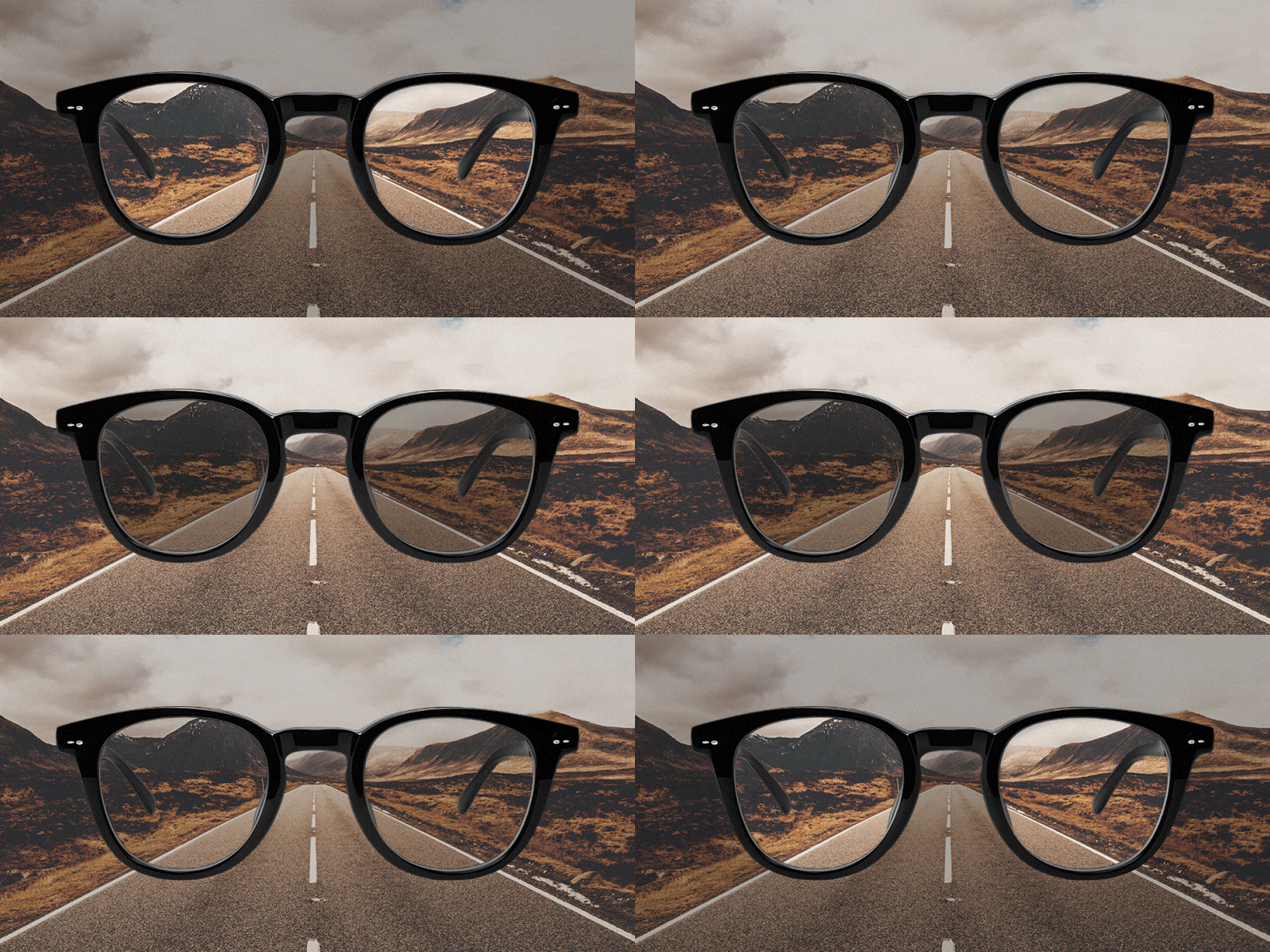
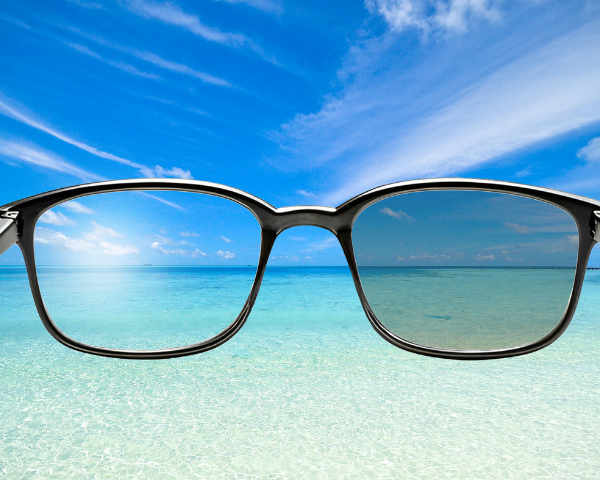
gif showing photochromic glasses

Also known as Transitions® lenses, photochromic lenses react to UV exposure by darkening in sunlight and returning to a clear state indoors. They adjust automatically, offering comfort and eye protection in changing light conditions. 

They’re a practical choice if you want the convenience of not having to switch between glasses and sunglasses throughout your day.

Made from glass or plastic, these lenses contain light-sensitive molecules that change structure when exposed to UV light. Most lenses darken within 30–60 seconds and fade back to clear in just a few minutes. 

Importantly, they provide 100% UV protection at all times, even when they appear clear.

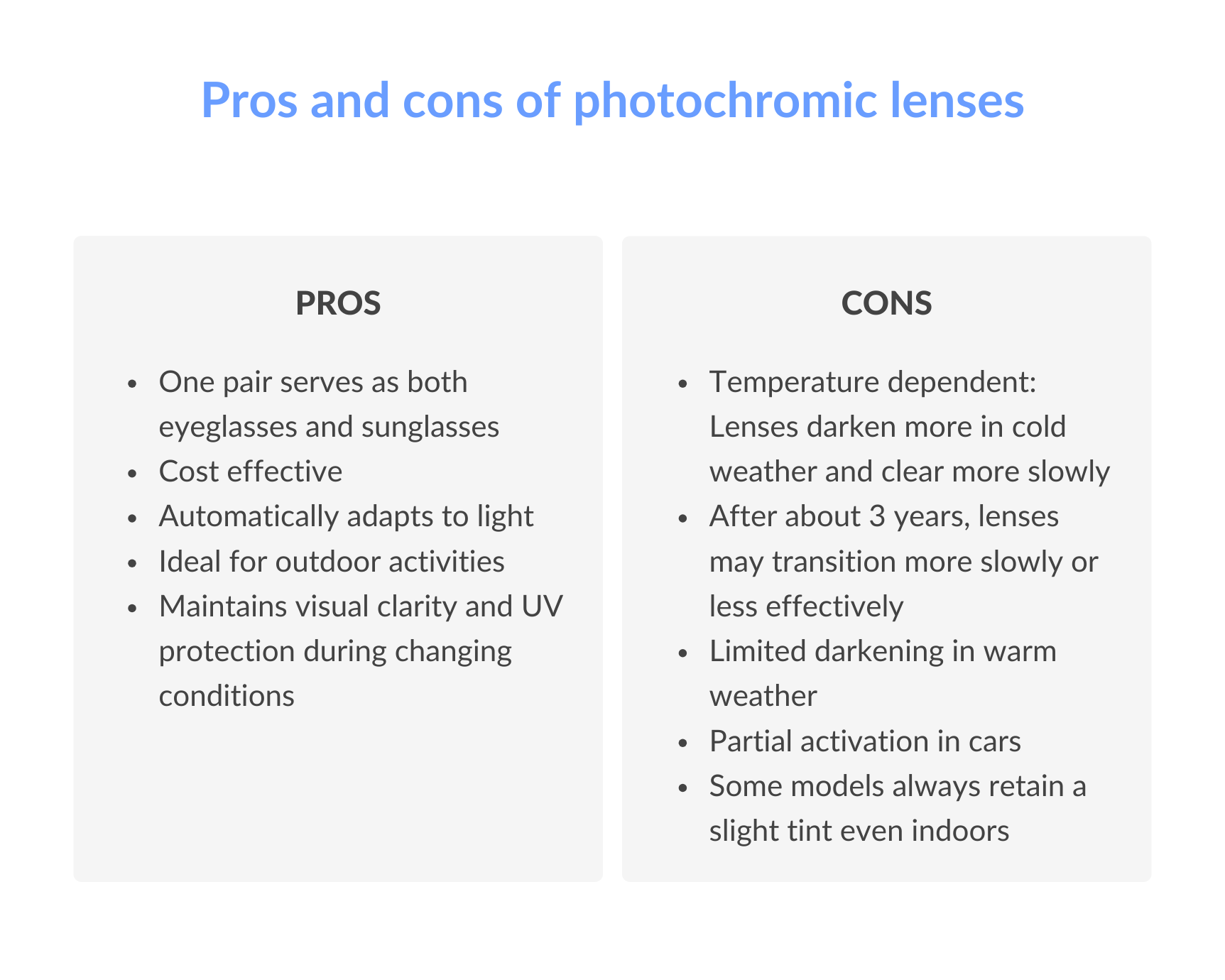
Pros and cons of photochromic lenses

Pros and Cons of Photochromic lenses

What are polarised lenses?

difference between polarised and non polarised sunglasses

Polarised lenses have a special coating that reduces glare, improves contrast and enhances visual clarity. They’re especially helpful for outdoor activities and long hours in bright conditions.

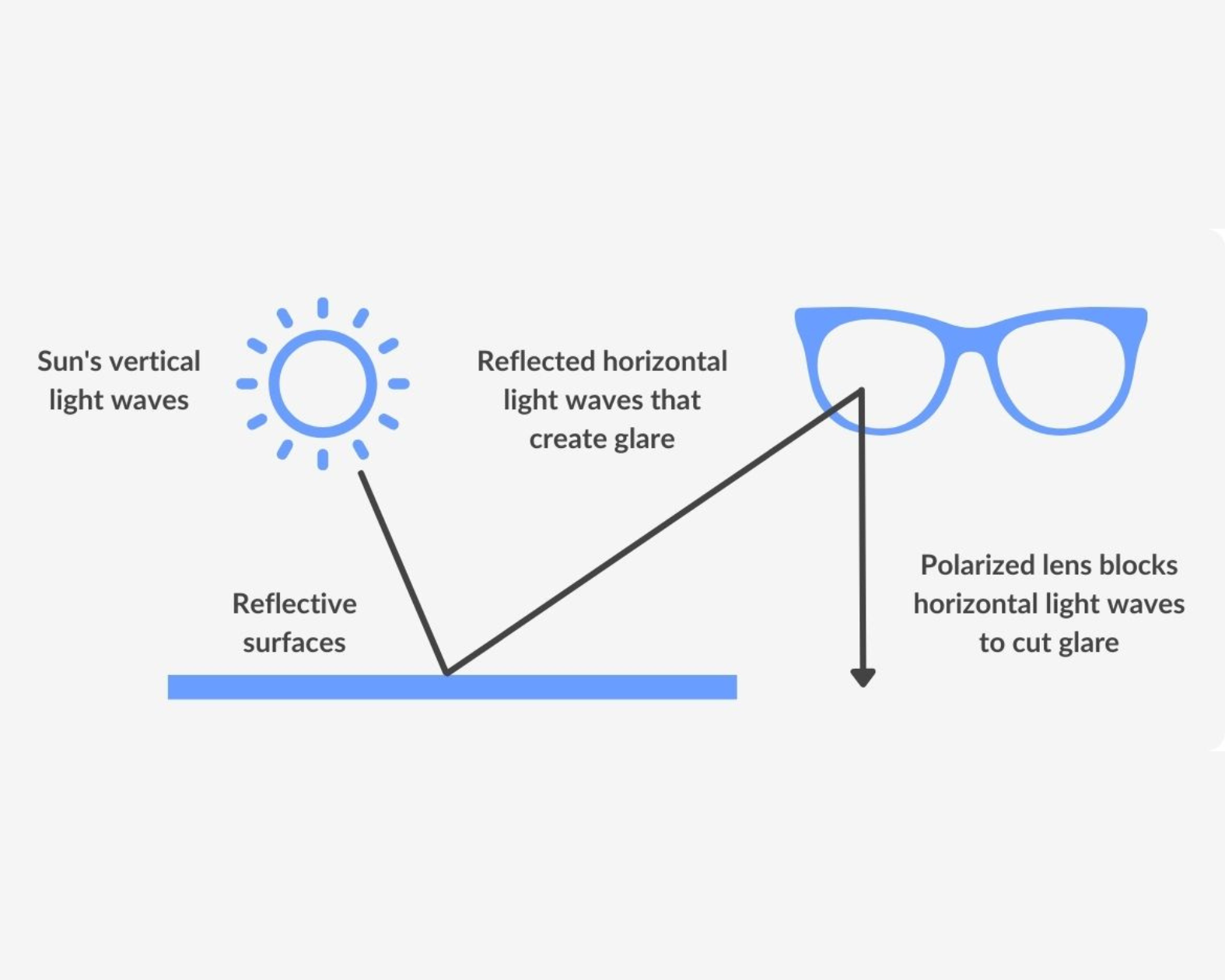
These lenses work by filtering out horizontal light waves that bounce off reflective surfaces, helping reduce eye strain and allowing you to see more clearly in bright conditions.

infographic explaining for polarised lenses work

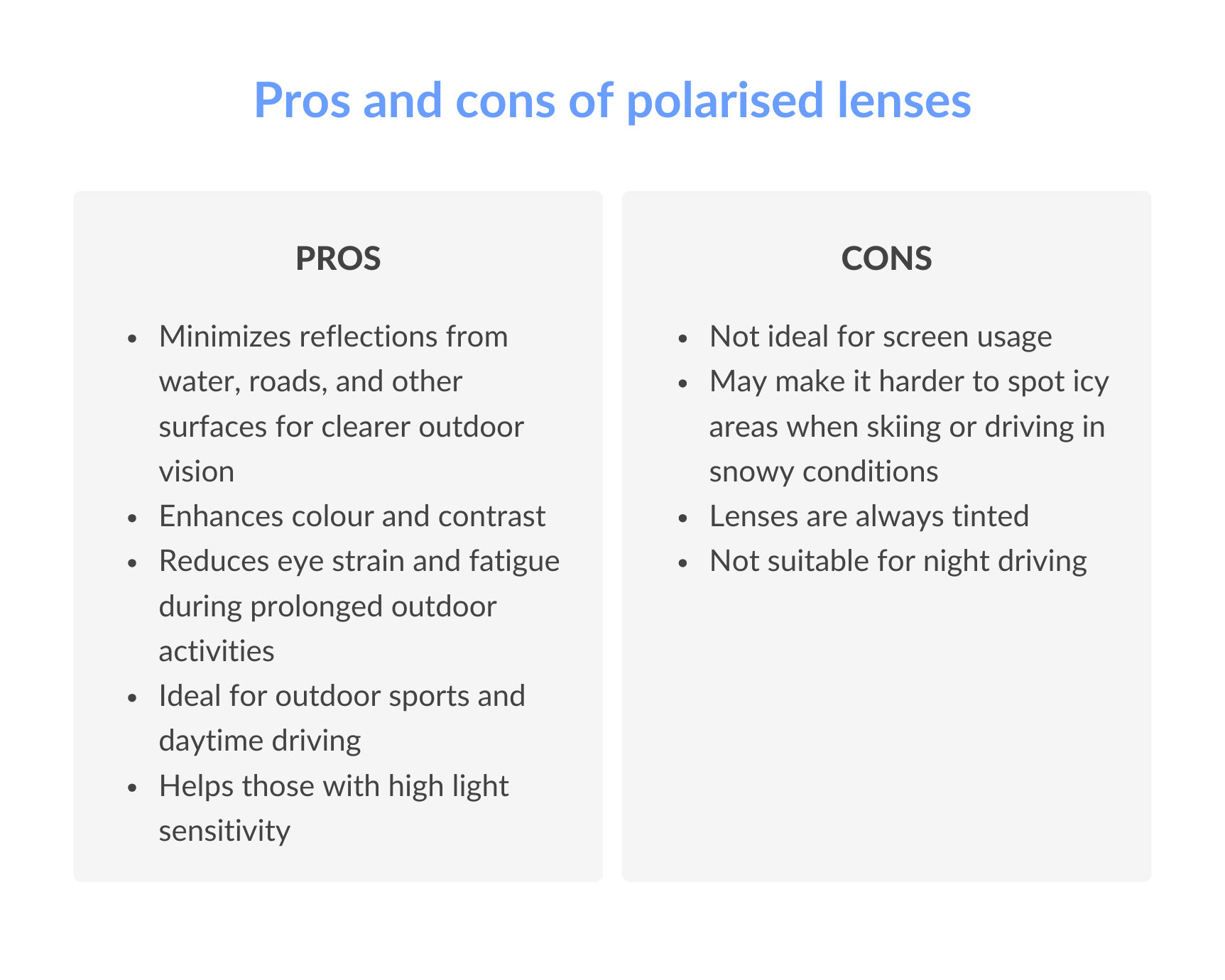
Pros and cons of polarised lenses

Polarised lenses are an exceptional choice for outdoor activities like driving, sports and spending long hours in bright environments. 

However, they’re not without limitations. Certain screens or icy surfaces may reduce their effectiveness and hinder visibility.

Pros and cons of polarised lenses
EXPERT'S TIP!

“Photochromic lenses don’t just respond to sunlight, they’re also triggered by UV rays. That means on cloudy days, they can still darken quite a bit.”

Neggie Saadatpay-Wright, Dispensing Optician

Conclusion

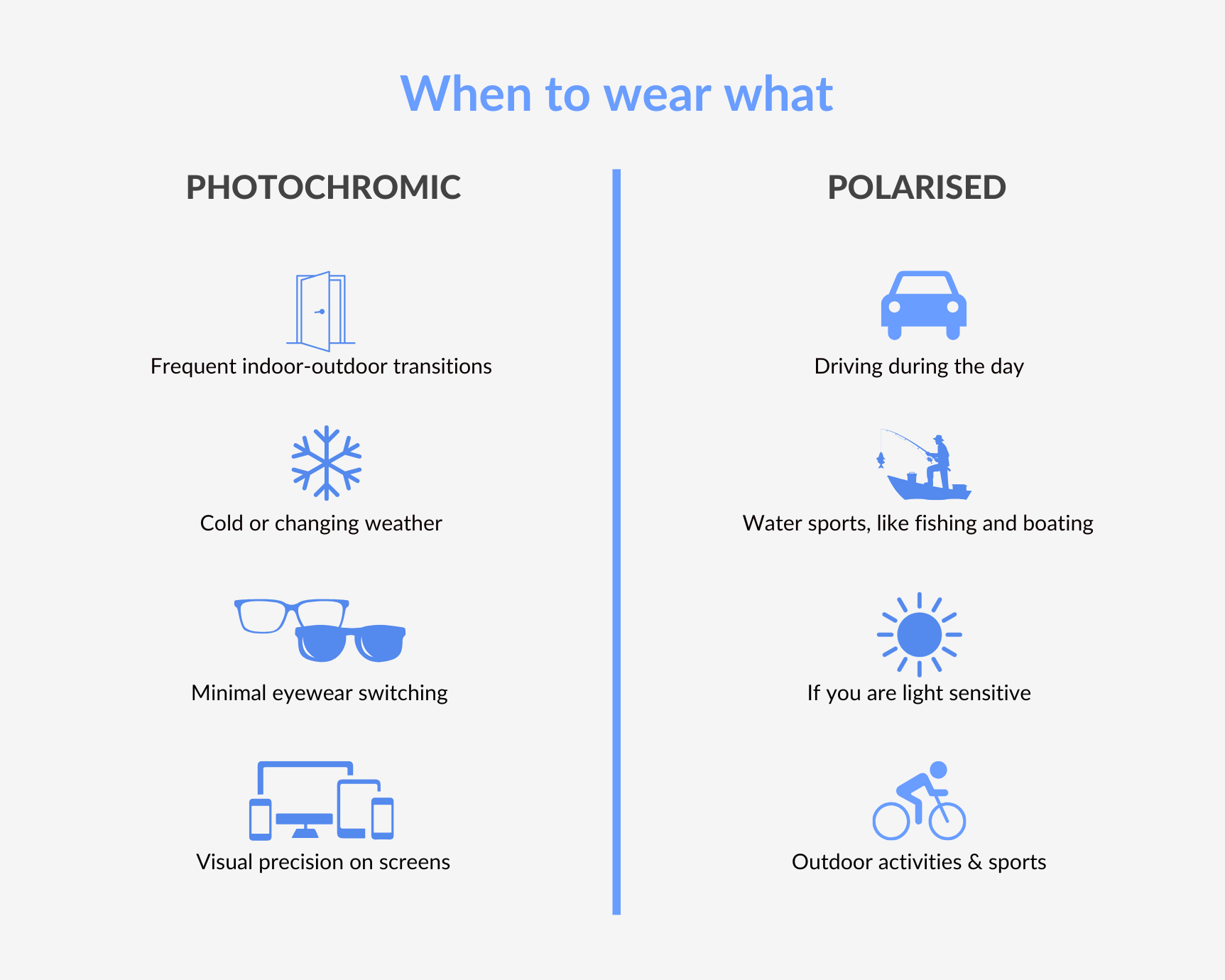
Both photochromic and polarised lenses offer comfort and protection, but the best choice depends on your daily habits and environment.

when to wear them

For more help deciding, visit our Optical Centre to learn more about finding the right pair for you. Our certified optical experts are also always available to give advice on how to choose the right lenses for your lifestyle.

Leave a comment

Your email address will not be published. Required fields are marked *